
Highly sensitive & specific biomarker of myocardial ischemia can now be used routinely for the diagnosis of acute coronary syndrome (ACS), via new CE-marked laboratory assay.
CRUMLIN, UK – 23th June 2011 / B3C newswire / – Randox Laboratories Ltd, the international clinical diagnostics company, has today announced the official worldwide launch of an automated laboratory assay for Heart-type Fatty Acid Binding Protein (H-FABP), to be used in the diagnosis and management of patients with suspected acute coronary syndrome (ACS).
This new quantitative, automated assay, and the encouragingly positive results of several recent trials, mean that H-FABP is now ready to be implemented into routine clinical practice, in combination with Troponin.
H-FABP is a low-weight cytoplasmic protein (15kDa) that is involved in the intracellular uptake and buffering of free fatty acids in the myocardium. It has been shown to be a highly sensitive & specific biomarker of myocardial ischemia, as it is released within 30 minutes of an ischemic episode and is 20 times more cardiac specific than Myoglobin.
Recent trials have shown that H-FABP has highly significant & additive diagnostic value, especially during the early hours following ACS symptom onset. Such results are particularly valuable, as this has traditionally been a “troponin-blind” period for hospital Emergency Departments, and many patients are conservatively admitted for further observation, in many cases, unnecessarily. The addition of H-FABP to an existing Troponin test offers the potential to rule-out ACS in many patients as early as their time of presentation to hospital.
These results have been shown to apply, even when one of the new generation of “high sensitivity” Troponins (hsTn) is used. The results of one recently completed study from the University of Manchester, UK, were presented at the IFCC EuroMedLab conference in
Dr. Body continues, “Recent publications report the enhanced diagnostic value of hs-troponin assays. However, it is becoming apparent that even a normal hs-troponin level at presentation doesn’t rule out acute myocardial infarction (AMI) without serial sampling. This demonstrates that there is still the clinical need for an early marker such as H-FABP. The preliminary analyses presented at IFCC EuroMedLab suggest that the combination of H-FABP and hs-troponin is extremely promising and we eagerly await the outcome and publication of our final analyses”.
Such new studies on the diagnostic value of H-FABP further build on the extensive existing evidence base on its prognostic value. Two recent landmark studies from a group based at Leeds General Infirmary,
“Presently, where Troponin is used on its own and generates a negative result, patients are frequently sent home,” says Lead Investigator, Professor Alistair Hall. “However, our study found that a significant number of these people are subsequently found to be at high risk of having a heart attack over the coming months, if they have not done so already. H-FABP can help to identify these high risk patients.” Recent data from the group also shows that these results hold true even after 6 years of follow-up and, again, even when a highly sensitive Troponin assay is used.
CEO of Randox Laboratories, Dr Peter Fitzgerald, believes the release of this new laboratory-based assay represents a new era in the clinical use of acute cardiac biomarkers. “This exciting new quantitative and fully automated assay means that hospitals around the world can now utilise H-FABP, in combination with Troponin, as part of their standard clinical protocol. H-FABP, alongside Troponin, offers much improved potential for ACS rule-out on presentation, better risk stratification across the ACS spectrum and facilitates improved management of post-MI patients”. He continues, “The new Randox H-FABP assay is a simple & rapid test that can be performed on a wide range of clinical chemistry analysers, without the need for specialist software, training or equipment. We believe it represents a wonderful opportunity to improve the management of patients with suspected ACS and enable a more effective utilisation of healthcare resources”.
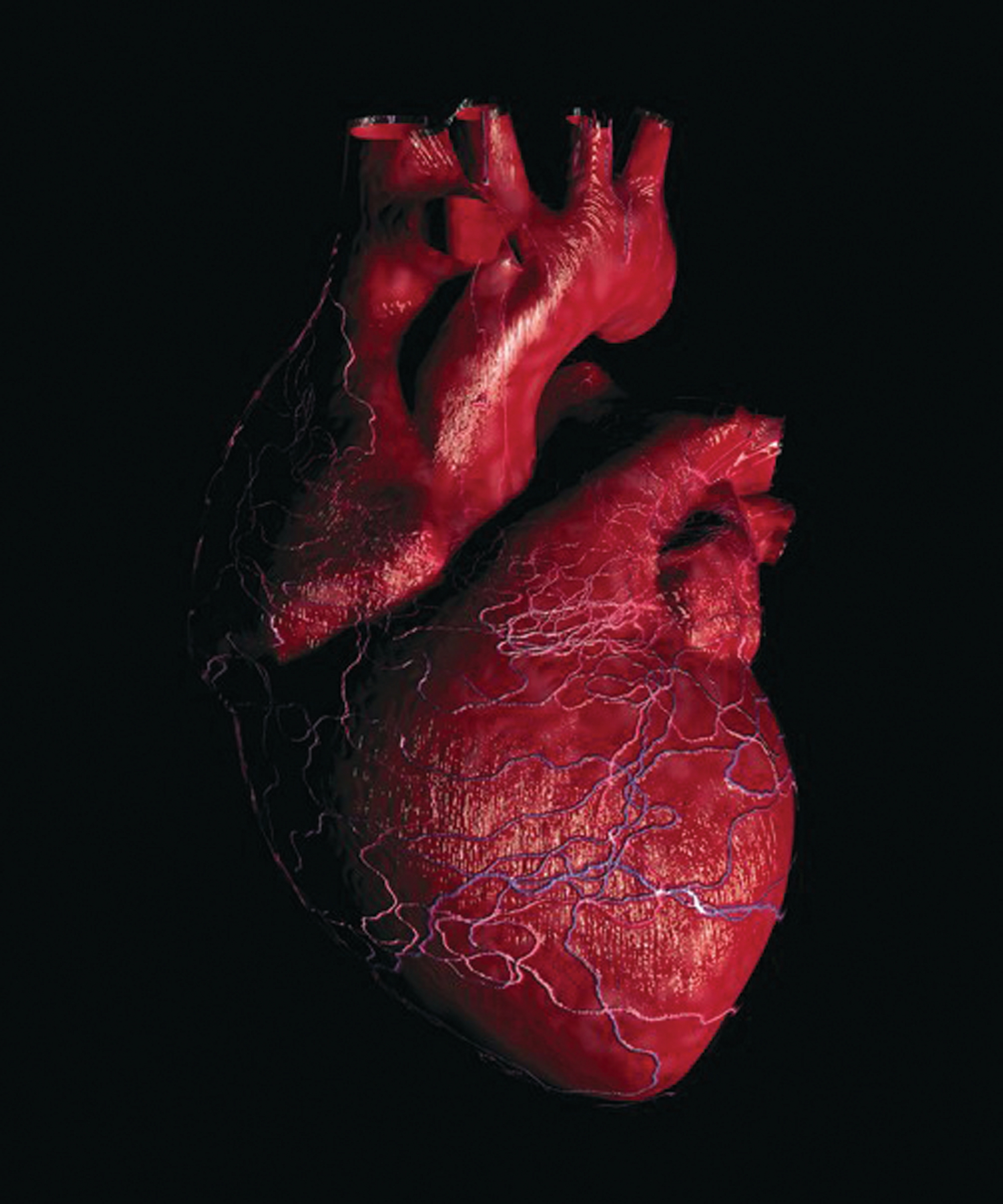
Caption:
Highly sensitive & specific biomarker of myocardial ischemia can now be used routinely for the diagnosis of acute coronary syndrome (ACS), via new CE-marked laboratory assay
For high resolution picture please right-click the image and select "Save target as..."
About Randox
Headquartered in the United Kingdom, Randox Laboratories Ltd. is a market leader within the in vitro diagnostics industry, manufacturing high quality diagnostic products for laboratories worldwide. Our extensive product portfolio offers a wide range of diagnostic solutions within the fields of cardiology, clinical chemistry, forensic toxicology, veterinary, drug residues, life sciences, oncology, molecular diagnostics and laboratory quality control materials.
For more information, please contact cardiologyThis email address is being protected from spambots. You need JavaScript enabled to view it.
Further reading
1.) Body R, McDowell G, Carley S, Wibberley C, Ferguson J, Mackway-Jones K. A FABP-ulous 'rule out' strategy? Heart fatty acid binding protein and troponin for rapid exclusion of acute myocardial infarction. Resuscitation. 2011 Apr 2.
2.) Kilcullen N, Viswanathan K, Das R, Morrell C, Farrin A, Barth JH, Hall AS; EMMACE-2 Investigators. Heart-type fatty acid-binding protein predicts long-term mortality after acute coronary syndrome and identifies high-risk patients across the range of troponin values. J. Am. Coll. Cardiol. 2007;50(21):2061-7.
3.) Viswanathan K, Kilcullen N, Morrell C, Thistlethwaite SJ, Sivananthan MU, Hassan TB, Barth JH, Hall AS. heart-type fatty-acid binding-protein (H-FABP) predicts long-term mortality and re-infarction in consecutive patients with suspected acute coronary syndrome who are troponin negative. J. Am. Coll. Cardiol. 2010;55(23): 2590-8
4.) Pearson IR, Hall AS, Gale CP, Sivananthan MU, Viswanathan K, Kilcullen N, Barth JH, In Acute Coronary Syndromes, Heart-type Fatty Acid Binding Protein is a More Accurate Predictor of Long Term Prognosis than Troponin. Circulation. 2010;122:A11374